


LIFTING DOCTOR NOTE
LIMO PLASTIC SURGERY
manager
125times Date 26-07-15 16:43
- Operator : Dr Lee Ho Jun
- Previous surgery history : Three-point facial contouring surgery 20 years ago; MINI Facelift 7–8 years ago
- Significant : Used to have Buccal Fat Repositioning before to correct hollowing in the side cheek area
- Age : 58 Gender : Female Korean Patient
Hello, this is LiMO Plastic Surgery Clinic.
A facelift, which fundamentally improves the sagging facial lines that come with age, is a procedure with very high patient satisfaction. However, if the focus is placed solely on simply pulling the skin tighter, unexpected side effects can occur.
1. Common Side Effects That Can Occur After a Facelift
The outcome of a facelift varies dramatically depending on how precisely the SMAS (fascia) layer beneath the skin is handled. An inexperienced procedure can lead to the following problems:
1) "Pixie Ear" Deformity: If the skin is pulled too tightly during closure, the earlobe gets dragged downward, resulting in an elongated, sharp shape.
2) Scarring and hair loss: If the tension applied along the incision line isn't properly distributed, scars can widen, or hair follicles near the sideburn area can be damaged.
3) An unnatural expression: Nerve damage or unnatural tension can cause asymmetry at the corners of the mouth or give the face a harsh, unfriendly look.
4) Cheek hollowing: If the skin is pulled without accounting for the face's overall volume, the area beneath the cheekbone can become sunken, which can paradoxically make a person look even older.
Issues such as Pixie Ear Deformity, scarring, and nerve damage are the type of side effects that can be prevented with careful surgical technique. Cheek hollowing, however, is different as careful technique during the facelift alone is often not enough to correct it effectively, and additional volume restoration through fillers or fat grafting is frequently required.
2. What Is "Buccal Fat Repositioning," and How Does It Prevent Hollowing Cheek?
Many people expect that a facelift will leave the face smooth and even, but depending on the original distribution of facial volume, the pulling process alone doesn't always achieve a smooth result. In addition, as we age, changes occur in the volume of facial bone structure and fat, causing areas of the cheek that were once naturally full to lose volume - resulting in hollowing that occurs on its own.
Buccal Fat Repositioning is a technique that restores this lost volume without relying on fat grafting or fillers.
Deep within our face lies a pocket of deep fat known as " Buccal Fat." As aging progresses, this fat pocket descends downward, contributing in part to the formation of jowls (or "bulldog" sagging along the lower cheek/jaw). Rather than simply removing this fat, the technique lifts it back up to where it originally belonged - the area of the cheek that has become hollow due to aging and then secures it in place there.
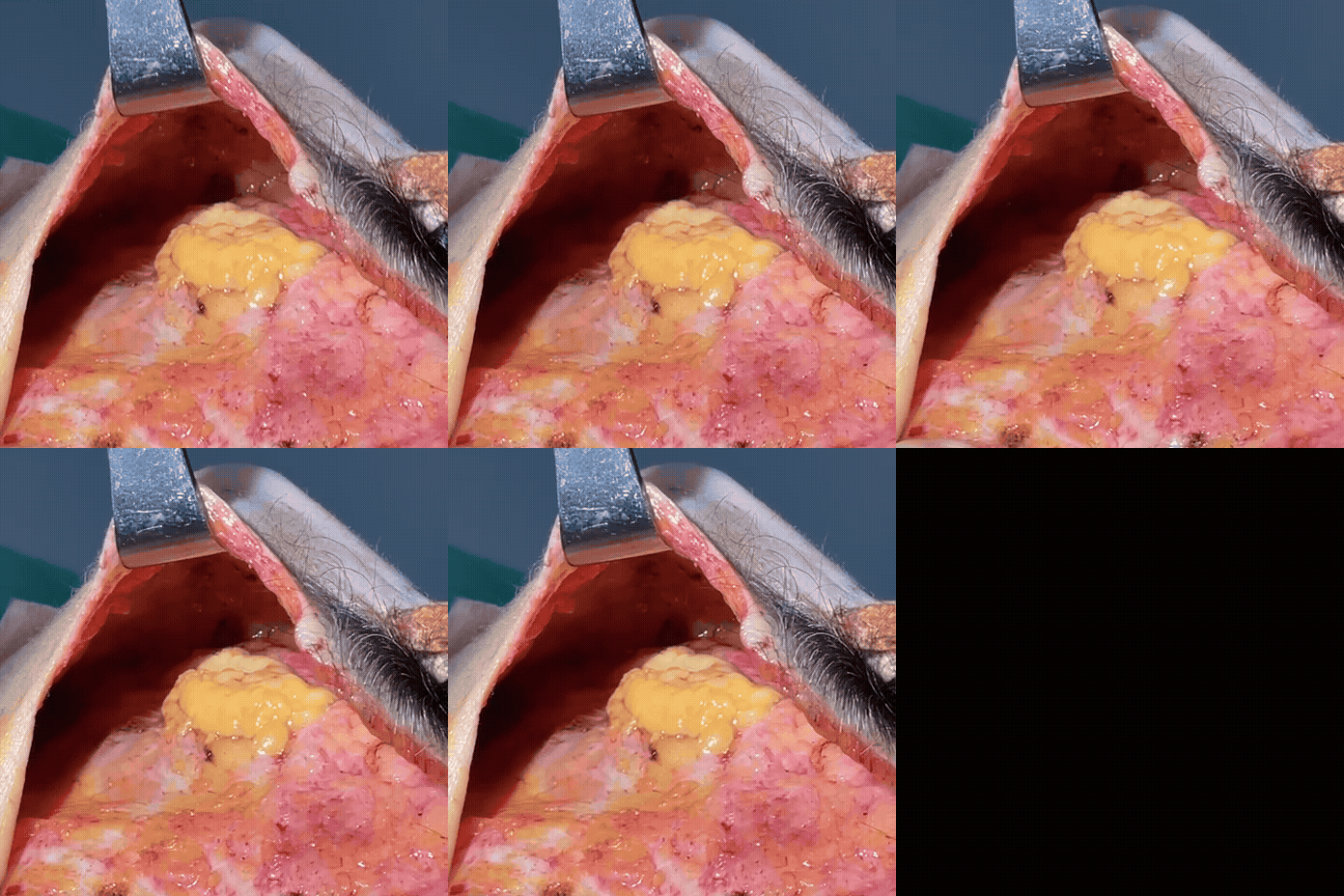
▲ The sagging buccal fat is repositioned upward and fixed in place at the hollowed area beneath the cheekbone
3. Why Is Buccal Fat Repositioning Necessary?
1) Natural-looking volume: Fillers come with a temporary period of firmness right after injection, and fat grafting has the drawback of leaving wounds at the donor site (such as the abdomen or thighs). Buccal fat repositioning, on the other hand, uses the patient's own existing fat tissue, so there is no risk of rejection and the resulting expression looks natural.
2) Smooth, refined contours: Heavy, sagging jowls are lightly refined, while the hollowed side cheek is filled back in, smoothing out an uneven facial contour.
3) Longer-lasting results: Because buccal fat is located in the deep tissue layer of the face, repositioning it means physically lifting and securing this deep tissue, which allows for a longer-lasting result compared to other volume-restoration methods.
Cheek hollowing caused by aging is not primarily the result of facial tissue sagging and volume simply shifting downward - it's closer to an actual loss of fat volume in that specific area.
This is why, in addition to skin tightening, volume restoration is often necessary as well. This is precisely why a facelift - a procedure meant to reverse the effects of aging, should not be approached simply as cutting away excess skin after pulling the face tight, but rather from a "reconstructive" perspective: repositioning the face's internal structures back to where they belong. This is especially true for individuals with a slim body type or thin skin, who are more prone to cheek hollowing. For these patients, buccal fat repositioning to prevent facelift side effects tends to be particularly effective.
Before undergoing surgery, having a thorough consultation with an experienced specialist who can accurately analyze your facial structure and fat distribution and propose a customized treatment plan is recommended.